

| THE 10-SECOND ANSWER
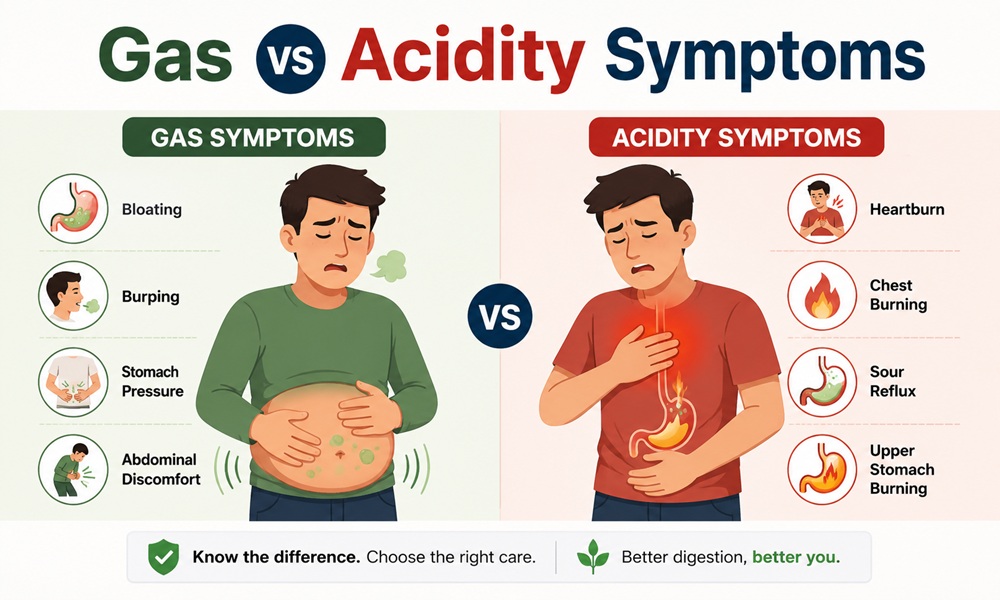
Gas is trapped air in the digestive tract — it causes bloating, cramps, belching, and flatulence, and usually eases after you burp or pass wind. Acidity is excess stomach acid — it causes a burning chest or throat (heartburn), a sour taste, and discomfort that lingers and often worsens after meals or when lying down. |
Gas and acidity are the two most-confused digestive complaints, because both follow meals and both can cause chest or upper-tummy discomfort. The fastest way to tell them apart is the comparison below.
Gas vs acidity: side-by-side comparison
| Feature | Gas | Acidity |
| What it is | Trapped air/gas in stomach or intestines | Excess stomach acid flowing upward |
| Main sensation | Bloating, tightness, cramping | Burning in chest or throat (heartburn) |
| Where you feel it | Lower or whole abdomen; can shift | Upper tummy, chest, behind breastbone |
| Pain type | Sharp, crampy, comes and goes | Burning, steady, radiates upward |
| Relief from | Burping or passing wind | Antacids; does not ease with burping |
| Taste in mouth | Usually none | Sour or bitter taste; regurgitation |
| Worse when | After gassy foods, fizzy drinks | After meals, lying down, at night |
| Other signs | Flatulence, audible gurgling | Sore throat, cough, hoarseness |
What causes each one
Common gas triggers
- Swallowing air (eating fast, fizzy drinks, gum).
- Fermenting foods: beans, lentils, onions, cabbage, dairy (if lactose-intolerant).
- Constipation, which lets gas build up.
Common acidity triggers
- Spicy, fried, oily, or very acidic foods.
- Caffeine, alcohol, and smoking.
- Large meals, late dinners, and lying down soon after eating.
- Stress, obesity, and certain medicines.
| INSIGHT MOST ARTICLES MISS
Gas and acidity are not always separate problems. Research on reflux patients shows that fewer than half of ‘acid’ symptoms are actually triggered by acid — many are driven by gas and an oversensitive food pipe. An overgrowth of gut bacteria in the small intestine (SIBO) can also fuel both heavy gas and reflux-like symptoms at once. So if antacids only half-help, the real driver may be gas and gut bacteria, not just acid. |
Quick self-check: which one is it?
Ask yourself three questions:
- Does it burn? Burning that rises toward the throat points to acidity.
- Does burping or passing wind help? If yes, it is likely gas.
- Is there a sour taste or night-time cough? That leans toward acid reflux.
Simple home steps that ease both
Everyday gas and acidity often respond to the same habits, because both are shaped by how, what, and when you eat.
- Eat smaller, more frequent meals. Large meals stretch the stomach and worsen gas and reflux alike.
- Slow down and chew well. This cuts swallowed air and supports smoother digestion.
- Track your triggers. A short food diary reveals which foods reliably set you off.
- Walk after eating. Gentle movement helps gas pass and discourages reflux.
- Manage stress and sleep well. Both affect gut movement and acid levels.
Warm water, fennel, or ginger can soothe mild symptoms, while antacids ease acidity and simethicone targets trapped gas. The key rule: if you need these remedies more than about twice a week, see a doctor instead of self-treating long term.
How to get relief
| For gas | For acidity |
| Walk after meals; eat slowly | Avoid lying down for 2–3 hrs after eating |
| Limit fizzy drinks and gassy foods | Cut spicy, fried, acidic foods, caffeine |
| Try simethicone; consider probiotics | Use antacids; doctor may advise acid-reducers |
| Stay hydrated; treat constipation | Raise head of bed; lose excess weight |
When it is more than everyday discomfort
Occasional gas or acidity is normal. See a doctor if symptoms are frequent (more than twice a week), severe, or come with vomiting, blood, black stools, difficulty swallowing, chest pain, or weight loss. Long-standing acidity can develop into GERD and needs proper treatment to protect the food pipe.
The bottom line: if it burns and lingers, think acidity; if it cramps and clears when you burp or pass wind, think gas. The two often travel together, so treating both how-and-what-you-eat habits usually brings the fastest relief.
FAQ
Can gas feel like a heart attack?
Yes. Trapped gas under the ribs can cause sharp chest pressure that mimics heart pain. When in doubt — especially with breathlessness, sweating, or arm pain — seek emergency care.
Can acidity cause bloating like gas?
Acidity and gas often occur together, so you can feel burning and bloating at the same time. The burning and sour taste are the acidity clues; the relief on burping is the gas clue.
Which is more serious, gas or acidity?
Gas is rarely serious. Persistent acidity is more likely to need treatment, because untreated reflux can damage the food pipe over time.
Note: General information only — not a substitute for personalised medical advice.
