

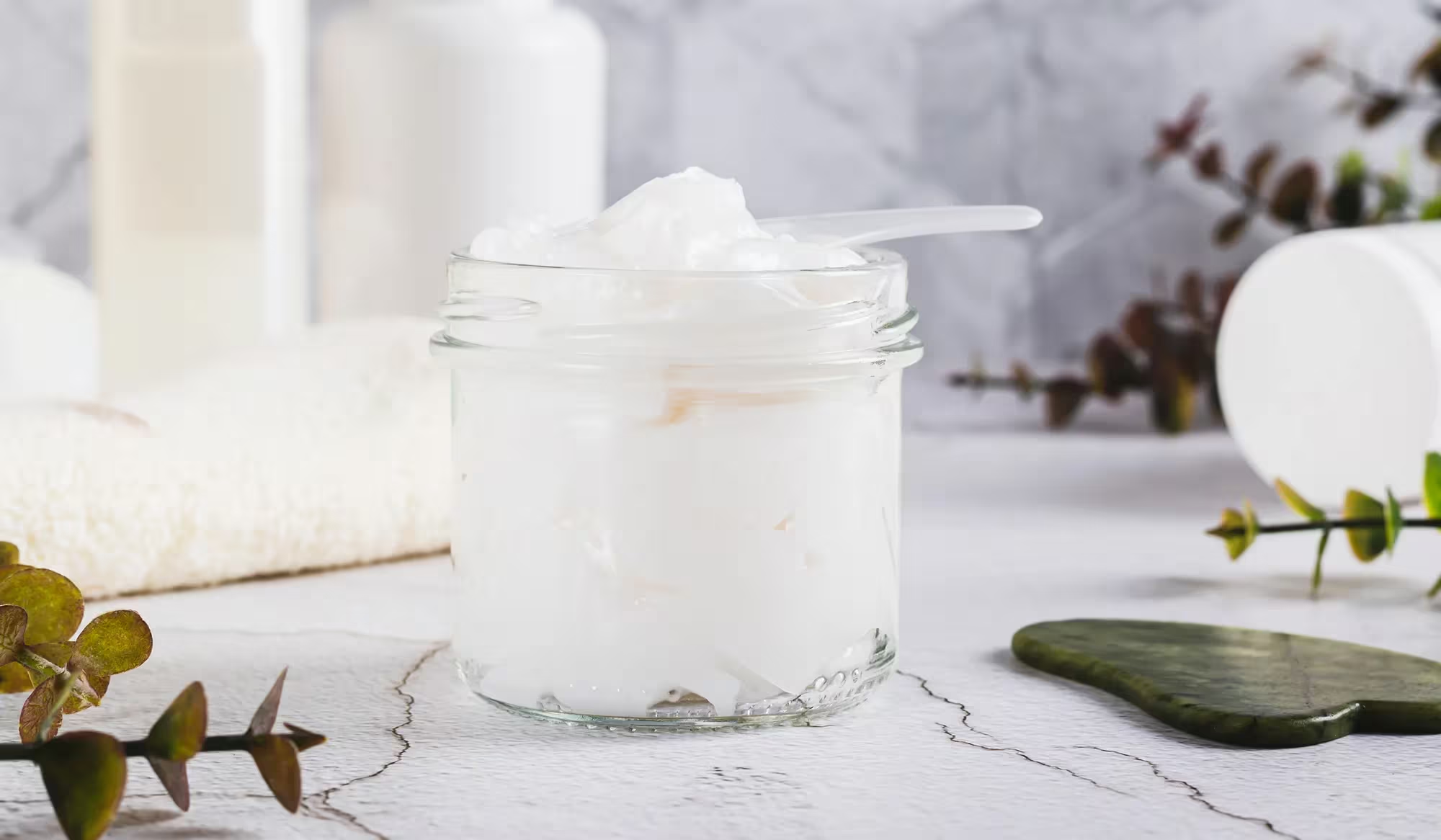
Is Beef Tallow Good for Skin is a question gaining attention as animal-based skincare becomes more popular. Applying animal fat to your face may sound like an old-fashioned remedy, but beef tallow has quietly become one of the most discussed ingredients in natural skincare. The reasons behind its popularity are more scientific than they may initially seem.
The short answer: yes, beef tallow can be very good for skin, especially for people with dry, sensitive, or reactive skin. It closely mimics the skin’s own natural oils, which makes it highly compatible – and for many people, surprisingly effective.
What Exactly Is Beef Tallow?
Tallow is rendered fat from cattle, typically from around the kidneys (suet). When purified and made into a cream or balm, it has a smooth, semi-solid texture that melts on contact with skin. It has been used in skincare for centuries – long before the era of synthetic moisturizers.
The key is quality. Grass-fed beef tallow has a richer nutrient profile than conventional. Look for tallow that’s rendered from 100% grass-fed, pasture-raised cattle.
Why It May Actually Work
1. Its Fatty Acid Profile Mirrors Human Sebum
Your skin naturally produces sebum – an oil that keeps skin moisturized and protected. Beef tallow contains oleic acid, palmitic acid, and stearic acid in proportions remarkably similar to human sebum. That biological similarity is why it absorbs well and doesn’t sit greasy on most skin types.
2. It’s Loaded with Fat-Soluble Vitamins
Grass-fed tallow contains Vitamins A, D, E, and K – all fat-soluble nutrients that support skin cell renewal, collagen synthesis, and protection against oxidative stress. Retinol (a form of Vitamin A) is literally the gold standard in anti-aging skincare, and tallow delivers it in its natural form.
3. It Contains Conjugated Linoleic Acid (CLA)
CLA has anti-inflammatory properties that may help calm irritated or reactive skin. This makes tallow potentially beneficial for conditions like eczema, psoriasis, or rosacea – though individual results vary.
4. It’s Free from Common Irritants
Most commercial moisturizers contain fragrances, preservatives, alcohols, and synthetic emulsifiers – all potential triggers for sensitive skin. Pure beef tallow contains none of these. For people who react to conventional products, tallow can be a surprisingly clean alternative.
Tallow vs. Other Popular Moisturizers
| Product | Skin Similarity | Key Vitamins | Fragrance-Free | Best For |
| Beef Tallow | Very high (mirrors sebum) | A, D, E, K | Yes (pure) | Dry, sensitive, reactive skin |
| Shea Butter | Moderate | A, E | Yes | Normal to dry skin |
| Coconut Oil | Low (comedogenic) | E | Yes | Body, not always face |
| Commercial Lotions | Low | Synthetic | Often no | General use |
| Jojoba Oil | High (wax ester) | E | Yes | Oily or acne-prone skin |
How to Use Beef Tallow on Skin
Start simple. A pea-sized amount goes a long way – warm it between your fingertips and pat lightly onto clean, slightly damp skin. Less is more, especially if you’re new to it.
You can use it as a face moisturizer, body balm, lip balm, or even as a base for a DIY cream mixed with essential oils. For the face, start with a patch test and introduce it gradually – every few nights at first.
Who Should Be Cautious
If you have very oily or acne-prone skin, introduce tallow carefully. Despite its sebum-similar composition, some people do break out initially – though this can sometimes be a purging phase. If you’re vegan or vegetarian, there are obvious ethical reasons to avoid it. Always choose clean, grass-fed, unscented tallow to minimize risk of impurities or additives.
The Verdict
Beef tallow isn’t a trend – it’s a return to something quite old. For people struggling with dry, reactive, or sensitive skin who haven’t found relief in commercial products, it’s genuinely worth trying. The science supports its compatibility with human skin, and the ingredient list couldn’t be cleaner. Give it 2-4 weeks for a fair assessment before drawing conclusions.
